
The Promise of Memorial Day – and the end of “Succession”
by Philip R. Liebman
American holidays tend to be commercialized beyond recognition of their origins and purposes. I have no quarrel with free enterprise benefiting from society’s patriotic (and other) sentiments. In fact, American business dedication, innovation, and sensibility have lent enormous strength to the power of our celebrations and remembrances. My questioning is of depth.
Small businesses have always led the way towards connecting people in meaningful ways, bringing a profoundly human touch and balance by engaging with their communities in ways that are both responsive to their customer’s needs and best interests and benefiting their communities economically, socially, and culturally. In this respect, Memorial Day sales are not offensive to me. They just obscure the deeper, more purpose-driven understanding of what we commemorate and why.
While most people associate Memorial Day with barbecues, parades, and big sales bonanzas — celebrating the kick-off of summer fun, the original purpose is less about celebration and more about commemorating something that is both sober and deeply meaningful. It was originally called “Decoration Day,” where fallen soldiers were honored and remembered by placing decorations upon their graves.
It was first widely observed in 1868 as proclaimed by Union Army General John Logan in remembrance of the sacrifice of Civil War soldiers. The end of World War I saw the holiday’s significance expand to honor all who had died in America’s wars. It was understood to be a solemn promise to remember those who had given the ultimate sacrifice for their country. It was about loss and hope for the future and ensuring that those who gave their lives didn’t do so in vain.
The commemoration was widespread throughout the United States. However, it was not until 1971 when the US Congress formally established the observance of Memorial Day as an official holiday — without specifying how you should celebrate, and certainly making no mention of car and truck deals, stores hawking patriotic merchandise or hamburgers and hotdogs. It was to be a day of remembering the heroes who were mainly unknown and nameless but to their friends, families, and loved ones.
Capitalism isn’t the exploitation of loss and hope but a way to make lives meaningful in ways that lifts the wellbeing of people in the communities we serve.
John Mackay of Whole Foods wrote in Conscious Capitalism, “Free enterprise capitalism has served to lift more people out of poverty than any other socio-economic system ever conceived – empowering social cooperation, human progress, and elevating humanity. Good business is the answer to many of the global issues that humankind is facing.”
There is no evidence that wallowing in sadness or self-pity serves society any good.
Capitalism isn’t the exploitation of loss and hope but a way to make lives meaningful in ways that lifts the wellbeing of people in the communities we serve. I don’t believe this meaning is lost on the people who lead the small businesses that are the backbone of the US economy and the centerpieces of American cultural life. Those who pioneer progress through innovation and enterprise understand that there is no evidence that wallowing in sadness or self-pity serves society any good.
On the other hand, free market capitalism ensures that the economic, social, and cultural needs of all people are served by supporting and elevating the broader standard of living that is the promise of successful, community-minded businesses. Leaders who seek only to profit perhaps need to be reminded of the purpose of the celebrations and their roles in guiding their workers and their communities at large.
Reading my news feeds over the Holiday weekend, I was surprised and a little amused by how much media attention has been given to the series finally of the HBO show “Succession.” (For those not familiar with the program, it shines a light on what many consider to be the most despicable elements of predatory business practices and the scions at the helm of the companies that give business a bad rap.) It seems that Memorial Day is deemed to be an apt occasion for remembrance of a show whose characters no longer live on. Like the fallen soldiers whose graves we decorated, their stories have ended, but for what we might remember.
James A. Garfield may have expressed it best when on May 30, 1868, at Arlington National Cemetery, he noted, “We do not know one promise these men made, one pledge they gave, one word they spoke; but we do know they summed up and perfected, by one supreme act, the highest virtues of men and citizens. For love of country, they accepted death, and thus resolved all doubts, and made immortal their patriotism and their virtue.”
The cast of characters demonstrates no such virtue. They are self-absorbed, cynical, and broken people infected with personal greed borne of their power and wealth, the likes of which people only dream of. Their broken lives and the wake of damage they seem to barely, if at all, understand all speak to the heart of the unfortunate image of power and greed many in modern society often attribute to those who lead successful business enterprises.
Succession presents the same kind of satirical view of this upper-class elite that painters including Francisco Goya, Édouard Manet, Michelangelo, 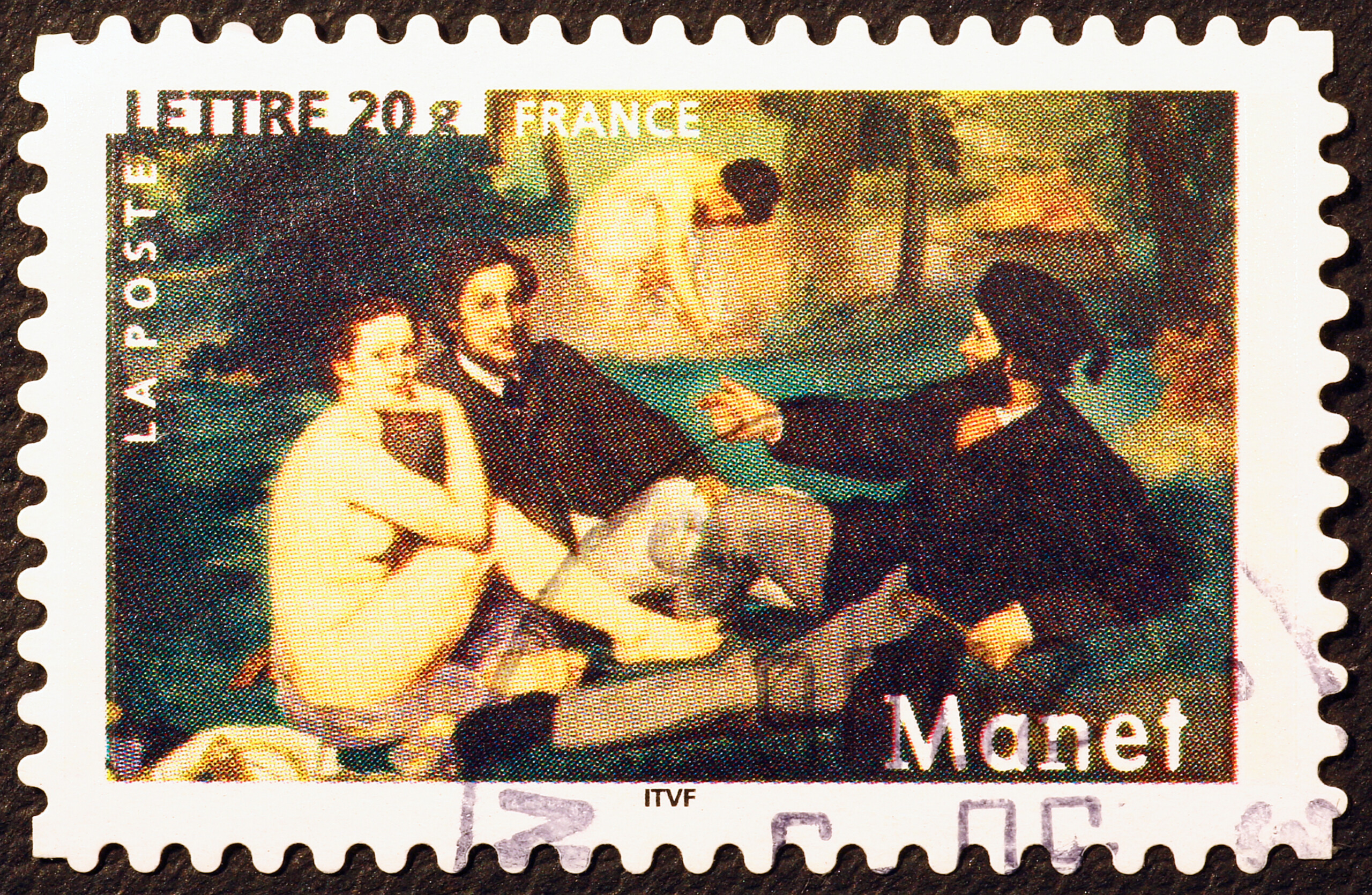 and the lesser-known Anne-Louis Girodet de Roucy-Trisson used to illuminate the flagrant, frivolous, and often absurd excesses of the aristocracy and the ruling class. While these sentiments might have fanned the flames of contempt by the common people, the artworks were beyond their reach.
The principal difference today is that mass and targeted media makes satirical messaging instantly ubiquitous, which is why Memorial Day news feeds were buzzing with commentary on the “Succession” series finale. The other difference is how it seems life today imitates art, and the promise of opportunity yields a desire for opulence rather than disdain. One can easily see the glaring similarities of wealth, power, and excess in the modern dynasties of Rupert Murdoch, Donald Trump, and any number of Hollywood, music, and sports industry stars —whose claim to power is a direct benefit of accumulated wealth.
Heralded bad behavior is, of course, not limited to any political affiliation. There are notorious liberals who rival the most rapacious fascists, proving that abuse of power and control is an equal opportunity offender of human dignity.
So why the obsession with Succession? It is partly because it has been heavily hyped by the powers of HBO, the media that created and broadcast it. In fairness, it also demonstrates writing, acting, and film production, which earns it some deserved accolades. Modern streaming television is a performing art that is in many ways similar to what drives popular leadership.
Leaders gain popularity and power through the media based on the perceived qualities of their performance. All warts and deficits are amplified just as the better qualities of vision, empathy, integrity, and relevance of experience.
Leadership is the ultimate performing art.
Unlike commercial entertainment, leaders directly influence people’s lives, with consequences far more severe than the damage or benefits that can be derived from what we view on television, in theaters and cinemas, or on the walls of museums.
The lines between fiction and reality might be severely blurred, and today’s entertainment industry often distorts and manipulates the public’s views of reality. However, so too, are the lines between authentic leadership and entertainment. Ronald Regan was masterful at proving this true. All leaders are actors: their success is tied to their performance’s artful qualities and believability, perhaps even more than what they accomplish. Just as great actors can suspend your disbelief with their performances, political leaders use a form of stagecraft to shape and project an image of who they are and what they stand for. To some extent, all leaders need to be actors to be effective. Leadership is a performing art.
This is the promise of leadership. How well you perform is a function of how you are seen as much as how well you hone your stagecraft. Leadership may be action in the moment, but the test of leadership is in your legacy, how you are remembered (and judged) for what you did or did not accomplish.
The public may have very short memories of most things. Still, history is decorated with great leaders (political, military, business, and otherwise) who have left an indelible legacy on the world. And while there is some truth to the cynical political calculus that the public has very short memories, it is also true that highly effective leaders learn to control both their destiny and how well they are regarded and remembered.
This brings me back to Succession. Bad news has always sold more newspapers than good news. Anyone can draw attention to themselves. It’s usually much easier to do by exhibiting bad behavior than being virtuous. Villains luridly appeal to the darker instincts of humanity. We have a hard time looking away from accidents and disasters. I think it is probably more likely that most people viewed the Succession storyline as a slow-motion train wreck. Humanity is set aside for the pursuit of selfish ambitions, and nothing suggests that altruism, in any form, matters.
You cannot directly control how the people in your life might remember you. You can and do have some influence based on your behavior and, even more so, derived from what you accomplish.
Fortunately, people will soon forget Succession as a phenomenon. It will be viewed perhaps for a few years in reruns. It will remain a source of trivia questions, and there will be new shows that will aim to compete with the interests of the loyal audience. But the show will have little consequence beyond those who have profited from their investments as producers. It will soon be forgotten, bringing me to the final point. How will you be remembered as a leader?
You cannot directly control how the people in your life might remember you. You can and do have some influence based on your behavior and, even more so, derived from what you accomplish. You can, of course, be remembered and revered for all the good you did. You can be celebrated for your contributions and generous spirit. Or you can be remembered for the damage you have left in your wake. People will judge you based on what they decide, not you. Fortunately, none of that really matters.
“Every man has two deaths when he is buried in the ground and the last time someone says his name. In some ways, men can be immortal.” –Ernest Hemingway
What you accomplish matters. Exceptional leaders are simply those who have accomplished what matters most. Again, you might try to deliver into the world the things that seem to matter to others, but you will find much more success and satisfaction when you aim first to accomplish what matters most to you. If generosity, kindness, contribution, service to others, and virtue matter to you, chances are good that people will take note. People might even remember you long after you have gone, granting you the only available means to achieve immortality. Earnest Hemingway wrote, “Every man has two deaths when he is buried in the ground and the last time someone says his name. In some ways, men can be immortal.”
If you live every day as if it may be your final day on earth and focus on living a noble purpose, you will decorate your days with things that people will remember you for. Even if your name is forgotten, if your contributions and sacrifices positively touched others, your deeds will be remembered and, more importantly, be relevant long after you have gone. That is the promise of Memorial Day.