
Broken Seashells — And the Search for Perfection
(This article was first published in Forbes online through the Coaches Council. You can find it here. )
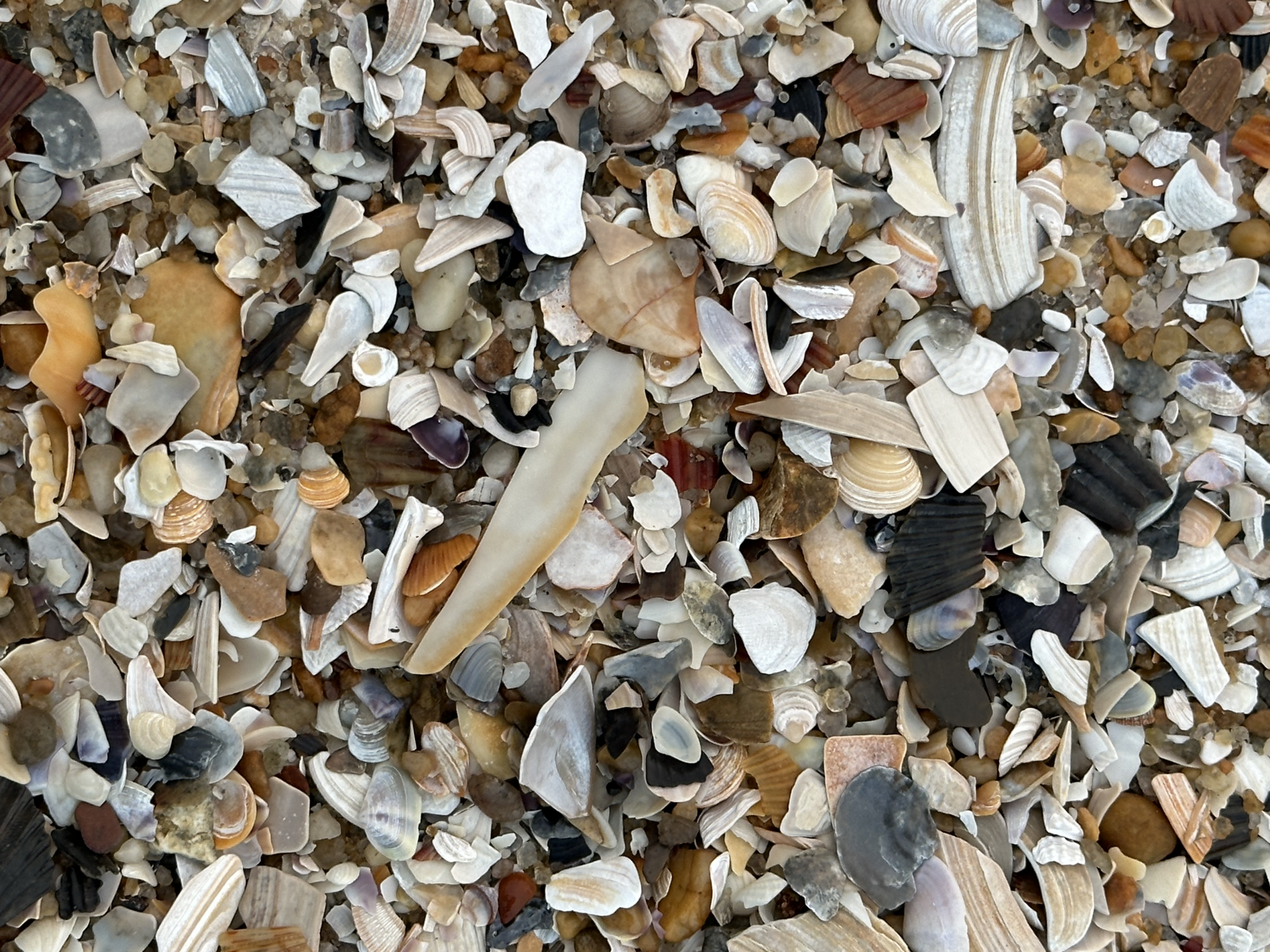
 Having recently spent several quiet days on nearly empty beaches at the New Jersey Shore, I spent hours admiring the beauty of all the broken shells and fragments scattered along the ungroomed sands. Searching unsuccessfully for elusive sharks’ teeth, my wife and I walked for hours along the beach, following ribbons of shell debris deposited by the surf. Some larger and fully intact common shells always seem abundant and easily findable. But the real treasures were amongst the millions of tiny shells and broken bits left by retreating gentle waves that litter the beach with remnants of sea life that wash up on the shore.
During the crowded beach season, these bits are raked into the sand, leaving mostly large shells visible on the surface. I have spent countless hours walking the water’s edge looking for perfect shells. The most common shells found on the New Jersey shore include the Ponderous Ark, Atlantic Surf-Clam, Blue Mussel, Easter White Slippersnail, Stout Tagelus, Bay Scallop, and the nautilus spiraled Knobbed Whelk, and Moon 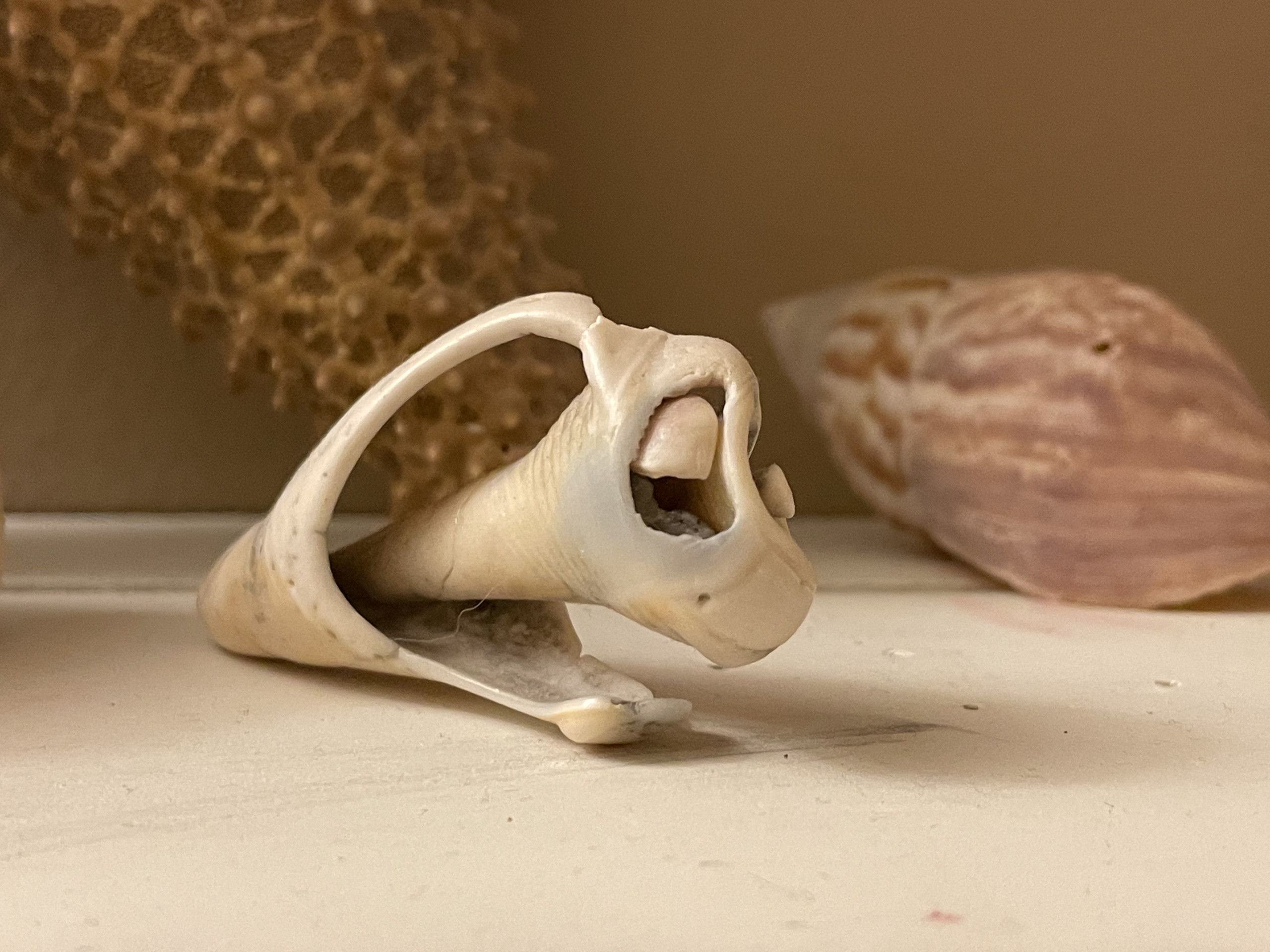 Snail. I find the names nearly as interesting as the shells themselves.
With each visit, we would bring home a small assortment of interesting shells we’ve found as souvenirs, sometimes placing them on shelves or filling glass jars or bowls to display and eventually hiding them away before throwing them away. It turns out that the collecting brings more joy than the collections themselves provide at home. As Ralph Waldo Emerson wrote, “Life is about the journey, not the destination.”
Searching for rarer, harder-to-find perfect specimens offers one such journey and a pleasant way to walk and enjoy the sound of the wind and waves and the smell of the salt air. Stumbling upon the occasional prize turns the effort into a hunt, even making me feel a bit competitive, if not slightly obsessive. Perfect shells may be elusive, but the search can provide me with near-endless enjoyment.
 I am often reminded, and nearly as often remind people, that perfection is the enemy of the good. While it is advice attributed to Winston Churchill, it is core to a sensibility that transcends any one person’s thinking or designs on life. Moreover, and often more applicable, is the warning to not let perfection get in the way of progress.
Many leaders and other high achievers seem to be at constant odds with striving for perfection when the best objective is continuous improvement. Perfection is a thorny prize, given that it is, in many cases, unobtainable or unnecessary. Yet striving for perfection is generally construed to translate into a noble cause, and progress is what then suffers.
The uncomfortable truth about perfection is that it is highly subjective for most things in life. There is absolute correctness in the mathematical calculations that could be argued as being examples of perfection. Geometry dictates perfect angles, circles, and lines. Exact equivalents by most measures are also defined by perfect mirror images. But the ambiguity around what perfection in most pursuits means all comes down to perception – more than science or objective reality.
In life beyond calculations, perfection often incorporates flaws. We value things that are unique or unparalleled in their beauty. For things such as gemstones, certain flaws are considered inherent to the value of the specimens. In sizing up people, seeing past their flaws is how we learn to best appreciate one another and learn to get along despite our differences.
The leader I point to as my greatest hero is Steve Jobs, not because of his genius or achievements or because I have become a lifelong fan of Apple products. What I admire most about Jobs is that he was influential and successful despite his enormous flaws as a human being. It is a relief to understand that I need not be perfect to accomplish things that matter a great deal. Striving to be perfect turns out to be entirely unnecessary and a colossal waste of time and energy.
The notion that “nobody’s perfect” is an excuse people often tender when making entirely avoidable or careless mistakes. It is vastly different from acknowledging that everyone is imperfect and that despite or perhaps even because of our flaws and mistakes, by being conscientious, we accomplish our causes in life and make a great difference in the lives of others.
Genuine love between two people always involves accepting each other’s flaws and imperfections. It is how we see both the physical beauty that might attract us to one person or another, but more importantly, it allows us to find the beauty in each other’s souls, which is what turns that attraction into an unshakable bond.
Finding the beauty in imperfect things is a function of being mindful. You learn to train your eyes to identify unusual or unique specimens among the clutter. You begin to follow patterns and relax your mind to expand your patience as you comb through the millions of tiny shells and fragments that stretch along the receding tides. You slow down to observe and release the expectations of what you will discover and find that you can appreciate whatever is in your field of vision. The more you release the expectation of finding perfect artifacts, the more you discover wondrous beauty amidst the broken shells.
It is easier to admire what others deem perfect than to be of your own mind and subjectively see beauty in things others don’t bother to look at or cannot see. This is what innovation is about. It is also what leadership is.
Leadership is a journey, not a destination. Great leaders don’t waste their time searching for perfect human specimens to carry out the tasks that are necessary. Instead, they focus on the broken shells, where there are unsung heroes, diamonds in the rough, and treasures that others might discard. Learning to really understand your mind’s eye, where what you see is a function of how you think, makes you a far more effective leader.
Great leaders don’t mold people into who they ought to be; they make it necessary and possible for them to develop themselves. While the job of a good leader includes developing new leaders, it is instructive to understand that your job isn’t to piece together broken shell bits and build the perfect shell. There are no perfect organizations.
The secret is seeing the potential in the perfection of the broken shells as they form a magnificent mosaic of talent, perspective, and performance. Learning to see beauty, perfection, and possibility in everything surrounding you is the key to accomplishing what matters most, finding many moments of overwhelming joy in life, and discovering how to cultivate more joy in the world.