How Necessary Dialogue Improves Leadership and Organizations
There was a time when the art of real debate was a noble pursuit. If you value learning over knowledge, (as you should,) respectful disagreement is the surest path to expanding your understanding of the world you live in. Different points of view that challenge your own perception of truth and reality are the foundation for not only better understanding the world around us – but better understanding of each other. Engaging in vigorous debate ultimately helps you understand who you are.
As our world has grown increasingly divisive, agreement represents safety and solidarity. Lines are drawn dividing those who agree with what we believe – and those who don’t. Those who agree are deemed to be friends and those who disagree are our enemies.
Nothing destroys human potential more surely or quickly than extinguishing curiosity. When we make it unsafe for people to be curious – and insist that certainty offers protection, we bring the advancement and the enhancement of our understanding of our world to halt. Worse, when you allow you reach for certainty in order to assuage the discomfort of what you do not know or cannot understand, we find ourselves reaching for false certainties that are likely to be based on dangerous assumptions. We ignore reality and self-soothe in fantasies that leave us vulnerable to natural consequences of the dangers we are avoiding.
Artful, purposeful disagreement keeps your focus on the possibility that you may be mistaken.
When you hold true the ideal that none of us are smarter than all of us – no matter how smart or clever you are – you allow yourself to be amazed by the power of the human spirit.
You welcome challenge – when your personal perspective reigns supreme – and even more when you learn there is a better way to think and take action.
This is why to be an effective leader you must take into account points of view that are contrary to your own. An often cited piece of wisdom – typically misattributed to Mark Twain ( but more appropriately attributable to Artemus Ward- AKA Charles Farrar Browne –an American humorist and perhaps the world’s first stand-up comedian,) who suggested that “it ain’t so much the things we don’t know that get us into trouble. It’s the things we know that ain’t so.”
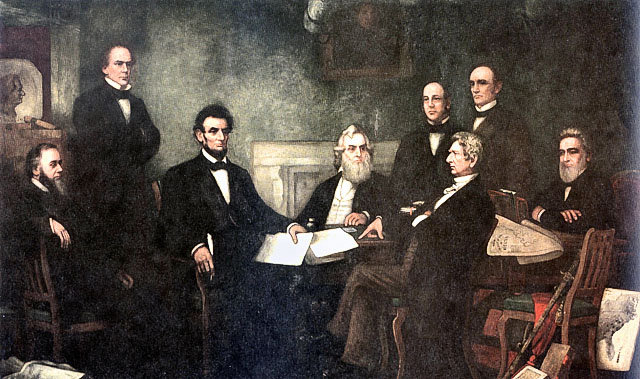
Abraham Lincoln famously assembled a team of rivals to be his cabinet – not just because he was politically savvy, but because he valued intellectual humility – and saw strength in the diversity of opinions. Lincoln clearly valued what he might learn over what he might know to be true.
This presumes that you understand the value in distinguishing learning from knowing.
In one respect, knowledge can be the product of learning. If you memorize a poem in order to recite it later, or learn that poem by heart – it doesn’t mean that you actually understand what you memorized. Nor does it suggest that you know how to write poetry, much less do so well. Rote memorization is a function of learning – but with clear limitations.
Knowledge can also be viewed a result or the objective of learning. Learning to interpret poetry, for example, requires understanding what you read in a broader context of meaning. Learning to write poetry involves developing a level of skill in terms of how you use words and how you understand imagery and perhaps metaphor. But learning to be a great poet would likely require having some innate talent – and then dedicating time and practice to developing yourself.
Knowing and learning are in fact two very different modalities of existence. In the knowing mode – you act with certainty based on what you believe you know. This is often a transactional approach to solving problems. Logic can be applied to certain problems, like math, for example, and anyone applying the correct process will deduce their way to a single acceptably correct answer. In a world where rules clearly separate right from wrong, rigid thinking is sensible. A knowing-being is someone who relies on certainty extracted from deductive reasoning.
When you operate in the learning-mode you favor curiosity over certainty. You hone your ability to question things and allow your inquisitiveness to guide your exploration – wherever it might take you. In this sense, learning is an adventure without boundaries.
Questions are not just the genesis of your learning, they are also the product.
By employing inductive reasoning, learning-beings prod reality and ponder what they find in search of the next question. This requires intellectual humility. You must be willing to be wrong about what you expect you might find, and yet be delighted in that discovery.
Learning beings are obsessed with questions like, “what if,” “what now?” and “what’s next?” Rather than searching for the satisfaction in getting something right – they use questions like “but what if I’m wrong here?” – and “what am I still missing?” to further their quest for learning – when knowing-beings have already packed-up and gone home, satisfied with what they have found.
Attempting to develop yourself – or anyone else to become a leader while operating in the knowing mode is an exercise in futility. Knowing is good for managing things – not leading people. If people could be managed – and they effectively cannot be – then it would be reasonable to cause people to perform as you desire – as you would any well-engineered, well-built and well-maintained machine. But people are not machines – and actually perform less effectively when they are treated like machines.
People may be predictable to some extent – and leadership is about applying curiosity to the problems you face regarding how people perform. Giving orders may get people to act – but how they act will always be of their own choosing.
Getting yourself to function as a learning-being is the first step towards becoming an effective leader. There is no recipe to following for influencing other people. In fact, there is no prescription for even influencing yourself as is evident by the growing legions of dysfunctional and incompetent people who populate modern civilization.
How many people do you know personally who would not survive – were it not for the safety nets that protect them from the consequences of the poor choices they routinely make?
Elevating how others perform and getting groups of people to behave in alignment towards a specific objective is the result of those people determining for themselves that doing so is necessary and accomplishing the objectives is possible. High performers can be defined by their sense of conscientiousness: they operate with a determined sense of moral purpose that guides them to place the interests of others above their own.
When people act without conscientiousness, dysfunction is what ensues.
Leadership is what helps people connect groups of people to a shared sense of purpose – perhaps even a shared destiny – so they perform individually and cooperate together with a sense of duty to something greater than their own personal needs or interests.
This kind of purposeful cohesion cannot be created by employing policies or even applying external forms of motivation. This kind of drive is always intrinsic – and leaders help people find the inspiration that connects them to the necessary shared purpose. The only way to capture people’s imaginations so they might find that purpose – is to demonstrate the level of curiosity that is required. This is why exceptional leaders understand that questions are the most powerful tool at their disposal. Great leaders don’t simply aim to capture the imagination of the people they lead – they cultivate it.
Honest discourse builds alignment by encouraging genuine curiosity. When people are free to disagree – they tend to imagine the outcomes they desire. When leaders set the example – and the standard, they actually benefit in two ways: by forcing themselves to engage their creative leadership tendencies – and by encourages others to do the same.
This is how organizations transform themselves from being mediocre and dysfunctional – to becoming high-performance organizations. It is not the leader that transforms the organization – it is the organization that transforms the leader – when people are empowered to question the status-quo – and are given permission to explore their potential without fear of failing or being wrong.
There are risks in opening up a forum where even radical ideas can be freely exchanged. But there is even greater risk cutting-off opinions, discouraging productive dialogue and offering people a sense of safety through conformity.
Great organizations, like Lincoln’s team of rivals defy conformity and refuse to yield to conventional thinking. It was the late Dr. Lee Thayer who argued fiercely that conventional thinking will always yield conventional results. The choice we all have is whether we will settle for mediocrity – or endeavor to be exceptional and accomplish what matters most.