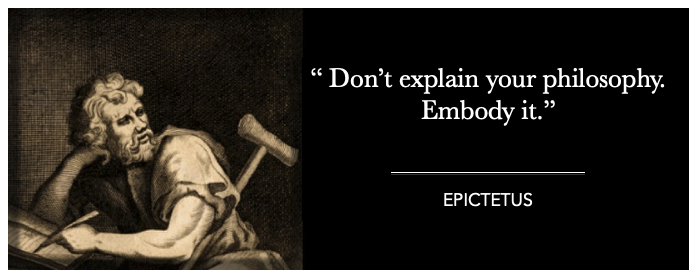
As a leader, your role is to influence. You design and deliver what you communicate to guide the actions of others. To accomplish anything meaningful and worthwhile, you must influence how people think at least as much as you instruct them how to act. And your capacity to be effective at impacting how others think amounts to how you think.
Any form of instructions is only valuable to people who can apply them and only useful to those who choose to. This problem applies equally to the kind of instructions that come with the pieces of unassembled furniture you might buy at Ikea and the directives you deliver to the people who work in your organization. Some instructions are infuriatingly unclear and unhelpful. And then some people refuse to take guidance no matter how clear or even necessary they may be. How many people in the workplace are seemingly busy, when in fact, they are struggling to just sort through the mess of parts and hardware piled up around them and doing little to accomplish what they are there to do?
It’s little wonder that so many leaders feel that it is their job to address the dysfunction within their companies. By attempting to clear the clutter, organize everything, and order people to perform by either enticing them with rewards or threatening to fire people that can’t or won’t. Evidence from numerous studies suggests that neither punishment nor incentives work to get people to perform to their full potential. People perform best because of an intrinsic drive to do so. Extrinsic pressures may initially increase a sense of urgency. But in the long run, external pressures do little or nothing to contribute to what makes people conscientious and does not instill the grit needed to accomplish extraordinary things. You might be able to manipulate people so that they “do” what you tell them to, but you cannot force people to “be” their best.
It is one thing to get people to be obedient to orders under the threat of punishment, disobeyed, and quite another to be dutiful – unless that sense of duty results from inspiration and a function of free choice. People who are inspired to take direction will do so from a leader they believe in and trust. Your words can invoke fear, or they can fuel inspiration in others. But your words only matter if people see that you mean what you say and say what you mean.
The words you choose to explain what you see, what you feel, what you want, and what you imagine are powerful expressions of who you are.
The words you choose to explain what you see, what you feel, what you want, and what you imagine are powerful expressions of who you are. Yet, we know from well-accepted research that the actual words we use represent only a fraction of what we communicate when we speak.
We have all seen people read words off a teleprompter that they obviously didn’t write or believe. The words say one thing, but the performance tells you this is a hostage video. It is clear that the speaker’s handlers are the ones who craft the script.
On the other hand, an accomplished actor can recite lines from a script and convincingly transform themselves into the character they choose to portray. Great leaders perform their role just as great actors do, effectively suspending the disbelief of their audience and making themselves into who they must be in the moment. We may know we are watching Tom Hanks, but we see Mr. Rogers or Forrest Gump. What do the people in your organization see when you are speaking to them? Do they see a leader whose words make a difference? Or do they see that person whose words are a meaningless prop meant to make you look like a leader?
Theodore Roosevelt said People don’t care how much you know until they know how much your care. Who you are matters more to people than what you say.
People will interpret the meaning of what they hear you say based on what they believe about who you are. Are you sincere, or do you seem duplicitous? Are you knowledgeable, or are you ill-informed? Can or should they trust you? Your words alone will never fully convince people as to who you are. People will come to trust you (or not) through your deeds and what you accomplish with your words and actions. You may fool trusting people at first with what you say, but your actions are what will expose them to your character and either confirm or dispel their initial impressions.
The author of “The Speed of Trust,” Stephen M. R. Covey (son of Stephen M. Covey – author of The Seven Habits of Highly Effective People), put it this way: “You cannot talk your way out of a problem you behaved your way into.” You cannot expect people to take your words over your actions.
How people define you is a function of impressions and reputation. People who have met you or know of your reputation have an imprint that could be to your advantage or not. These impressions tend to be difficult to change – though not impossible. The challenge is that people own their impressions of you – and are free to do with them as they wish. People form their opinions based on their beliefs and tend only to change what they believe when prepared and willing to learn something new.
If they do not know you, people tend to quickly form an impression of whom they think you are. Their assessment is a function of cognitive bias, or the preconceived notions informed by their habits of thinking. Their impression of you may be rooted in the color of your skin (or your hair), the tone of your voice, the size or shape of your body, your position in life, or the title you hold – or even the location from where you are speaking. (People on stage or television have an imprimatur of authority and expertise that people at one time implicitly trusted – though the power of this kind of celebrity has clearly fractured and faded somewhat in recent times.)
If a person has no clear basis for forming their belief as to who you are, what you care about, or whether your words should matter, they may literally choose to take you at your word.
The listener or reader is always the arbiter of the meaning of your words. The writer chooses what to say, but the reader is always the author of the meaning. Meaning is a matter of choice; you choose what you believe and what you don’t.
People may also clearly understand what they believe you want them to do – and choose to do the opposite. Doing so might be ill-advised or at their peril. Or it might be for good reason if they do not trust that your interests support or align with theirs.
When you assume the role of a leader, you should also assume that people are watching. Your credibility is always on display.
When your audience sees that what you say is different from what you do, you will have difficulty convincing anyone to adopt what you believe or follow you. Leaders who are successful at persuading people to follow them are more likely those perceived to be congruent. When people look to you, they want to understand that what they see is what they get.
Leadership is about making yourself simply understood – especially when how to achieve whatever the shared objectives maybe are not. Because our world is increasingly driven by VUCA forces, meaning volatile, uncertain, complex, and ambiguous, people turn to leaders who can simplify the choices that must be made. This level of needed trust is why your character as a leader is so vital.
Words Have Consequences
Your words can elevate people, so they access their full potential and accomplish great things. Or they can hurt and demoralize people, stir chaos, cause confusion and drive dysfunction. You can use your words to encourage and nurture inspiration and unite people around a noble cause. Or you can use words to manipulate, castigate and divide people for selfish purposes. At some point, most of us discover that our words have power, and regardless of our intentions or desires, they can take on a life of their own. As a leader, you should always choose to use your words wisely.
Throughout history, there have been leaders who are gifted with the ability to use their words to craft messages with tremendous reach and appeal. People like Winston Churchill, Mahatma Gandhi, Abraham Lincoln, Mother Theresa, Abraham Lincoln, Ronald Regan, and Marie Curie are all noted and often quoted for their eloquent wisdom and fierce insights. They have directly and indirectly inspired millions of people through their accomplishments as well as their words.
There are also the brutal, murderous leaders like Genghis Kahn and Ivan the Terrible who ruled ruthlessly simply because they had the power to exert nearly absolute control over people’s lives. Their power was their might – not their words. But what about the likes of Adolph Hitler? Some say he had the qualities of a great leader whose aims landed him on the wrong side of history. His words powerfully united people who were inspired by what they believed was a utopian vision for humanity.
We have seen leaders like Hitler exert their influence by using their words to foment hatred, incite violence, and even exterminate innocent people in the pursuit of scurrilous aims. The power of their words is no different from those used by Nelson Mandela, Eleanor Roosevelt, Dr. Martin Luther King, and Mahatma Gandhi. The difference was not just their intentions but the consequences of their words when they take on a life of their own.
Words may have consequences, but not always the intended ones.
Leaders often command control by means of their authority. Command and control leadership works when you have the authority to exact punishment on anyone who disobeys you. In military leadership, where discipline is paramount to success and disobedience rises to matters of life and death, respect for authority is interchangeable with fear of punishment. It is essential in the lower ranks where soldiers must do what they are told to without question or hesitation. Their thoughts and opinions are irrelevant; they are likely to be deadly in battle, where the chain of command makes success possible. People don’t naturally follow orders; they are subjected to rigorous and often harsh training to ensure they do.
Command-and-control leadership is reactive. There is an exact measured consequence for every infraction, and there are rewards through promotions up the ranks for those who perform exceptionally. Battle strategies are similarly reactive, with planned offensive and defensive measures and countermeasures. This kind of planning and execution requires discipline in the ranks and the thinking left to those in charge.
In business, you may also be able to influence the behavior of those in your charge by simply exercising your authority. The difference is the constraints on the punishments you can give. You are essentially limited to leveraging your influence through your hiring and firing authority, control of compensation, promotions, assignments, and any number of perks that employees may desire.
At one time, it was acceptable practice for bosses to bully their employees and use a hostile work environment to emulate the kind of obedience and discipline used in the military. While there are considerable legal constraints on what you can and cannot do – within the boundaries of what is legal and ethical, there is still a great deal of latitude. Many workplaces manage to operate in a reactive, fear-driven environment, though increasingly, high-performance organizations have shifted to more creative leadership styles that empower rather than control workers at all levels.
While a command-and-control leadership style was the standard throughout much of history, evidence suggests that using more creative leadership tendencies is more effective in the VUCA world we live in today. The reactive nature of commanding control over people presents measurable limitations on how well you can get them to perform. There is evidence that suggests that even people who perform menial and repetitive tasks elevate their performance when they understand the purpose of their work and the value they contribute to the overall organization’s success. This sense of purpose and the satisfaction of accomplishing something meaningful improve performance and produce a source of joy. Leaders who effectively communicate meaning and define purpose benefit workers’ lives as well as benefiting their organizations.
Demonstrating authority is often misconstrued as a measure of leadership strength. There is a fear that any sign of weakness will be exploited. However, the strength of a leader is measured by the accomplishments of the organization. Authoritarian leaders are typically rigid and resistant in reaction to change, while leaders that demonstrate more creative tendencies are more agile and adaptive to change.
Another problem with using the power of your authority to manipulate behavior is that it will never get you as far with people as you will by gaining their respect.
Another problem with using the power of your authority to manipulate behavior is that it will never get you as far with people as you will by gaining their respect. People will more readily respect your authority when they feel respected in return. Expecting obedience without demonstrating respect for your workers cultivates distrust and resentment. In organizations that operate on a foundation of mutual respect, you find diligent, hard-working, loyal employees who take pride in their work. You also find leaders who articulate a clear and compelling purpose that causes people to be conscientious and feel genuine satisfaction from the contributions they make.
Conscientiousness is a purely intrinsic human drive. It suggests your actions are guided by your conscience: your sense of right or wrong. This self-regulation requires that you feel that what you are doing is connected to a sense of purpose and that what you are doing serves something beyond your own needs or interests. This altruism is how people operate with a commitment to the contributions they make and with a strong sense of duty to the organization’s welfare.
You can demand fealty and insist that people work hard or pay the price. You can try to make it necessary for people to work diligently using incentives and threats, but you cannot make another person conscientious. What you can and must do is give them a reason to be conscientious. Leaders who make clear why what the organization does is important through their words and actions attract the kind of people who are willing to do whatever it takes for a worthy purpose. It is what Simon Sinek speaks about in his book “Start with Why.” When people understand and share your why, they will demonstrate their trust, loyalty, and advocacy, or what my friend Sean Flaherty of ITX Corporation calls “the loyalty ladder.”
It is also true that a leader’s authority can confer steadiness and certainty. People often feel safe and secure under the paternalistic protection of a strong, proven leader. But total certainty is rarely attainable and is never the case when facing adversity. The very need for strong leadership exists because uncertainty is the normal condition surrounding most things we consider worthwhile. People depend on leaders to help navigate obstacles, mitigate risks, set the direction, and correct course to address changing realities.
A creative leadership style tends to be more effective in addressing uncertainty. These leadership tendencies encourage collaborative problem-solving, cultivate innovation and increase people’s dedication to established solutions by allowing them to participate and even share control.
Leadership is not about controlling others; it makes it necessary and possible for people to control themselves in ways that serve the organization’s objectives.
When former US Navy Rear Admiral Grace Margaret Hopper suggested, “You cannot manage people. You lead people and manage things,” she noted that people resist being controlled. Leaders control situations by ensuring that the people in their charge take charge of the things they must control and offer support, guidance, and all necessary available resources to the people who manage those things. This approach is leadership at the core. But how do you lead people if you cannot control them?
Capable leaders learn that the answer is that people are more than willing to be led by people who can help them accomplish what really matters. Conscientious people want nothing to do with overbearing managers but welcome and are attracted to great leaders. Competent leadership attracts competent followers.
Competent leaders are those who serve the people in their charge. They understand that it is those they serve who make them successful, not the other way around. They are exemplars of the kinds of behaviors and competencies required for their cause to succeed. Competent leaders are exceptional human beings. They are virtuosos in making themselves into the sort of people they need to be; shaping and provisioning their organizations into what it is required to accomplish their aims; developing their people into competent contributors and leaders and create the meaning and telegraph the purpose that makes clear why everyone must do what they do.
Competent leaders do not concern themselves with control.
Competent leaders do not concern themselves with control. Instead, they make themselves into people that attract other competent people and attract people who have the potential and drive to become fully competent. They earn the respect of others by what they say and what they do. And earn the trust of those in their charge by expecting nothing less than the best of what people are capable of offering – and expecting even more of themselves. And they understand that leadership is a performing art.
Like great actors, exceptional leaders choose the roles they play. The costumes, the stage, and the people cast around them are important, but nothing rises to how prepared they are themselves to perform. And the words you speak matter, to a degree. However, let’s not forget the great era of silent films. Rudolph Valentino, Greta Garbo, Charlies Chaplain, Lilian Gish, and Buster Keaton – lit up the silver screen and captured the hearts and imaginations of millions of fans – without uttering a word.