One More Thing to Thank Volodymyr Zelensky For
Great leaders are exceptional performers; that is, they perform exceptionally. Is their performance comparable to the stagecraft of great actors who convincingly transform themselves into the characters their roles summon them to be?
Like stage actors, highly effective leaders deftly and almost magically suspend an element of disbelief that enables their audience to believe what they witness over what they might otherwise know to be true. Great leaders elevate the stage to become the sky above and the world around us, transforming the audience from spectators to actors themselves. The stage transforms from the physical space before you into a product of your stimulated imagination.
Are great leaders first and foremost leaders, and perhaps also happen to be great performers? Or is it that their leadership competence is informed by and because of their being accomplished performers?
In my formal studies of leaders and leadership, Dr. Lee Thayer repeatedly, consistently, and forcefully presented his view that leadership is a performance art. His arguments were in part grounded in academic rigor.
Thayer’s academic background was in musical composition and arrangement (and as a jazz performer), having earned degrees in humanities (his PhD. in philosophy), engineering (while an officer in the US Navy), and advanced degrees in social and clinical psychology. He was also one of the founders of the field of communication as a university discipline. He had taught or lectured at many of the most prestigious universities in the US, Canada, Mexico, Europe, Scandinavia, Australia, and China. He had been a Fulbright professor in Finland, a Ford Foundation Fellow at Harvard, and was twice awarded a Danforth Foundation Teacher Award for excellence in his teaching.
But the depth and strength of his views and convictions were formed, as Lee described it, by “working in the trenches” with leaders throughout the world, to which he devoted the final 30 years of his life along with his extensive writing.
Leadership is a highly pragmatic human function measured by what you actually accomplish (or not). We can only measure performance by measuring the significance and meaning of what we accomplish. By Lee Thayer’s account, a leader’s performance didn’t connote strictly the artistry required to influence people, but the preparation and actions one must take to impact things: to make what is necessary possible and what is possible necessary and accomplish what matters most.
It may seem that how we go about our craft is less important than what we achieve, but how we behave and how people view our performance has consequences in terms of what we ultimately accomplish. While significant accomplishments have resulted from fortuitous accidents, we do not bestow the same level of deserved credit as we do for those who devote themselves in pursuit of a great and worthy purpose. And those whose achievements are revealed to be the result of deceit, carnage, or senseless brutality are written into history as barbarians, not great or heroic leaders.
In leadership, character matters. Altruism is revered, while narcissism taints even the good work one does. Sociopaths might rally the hearts and minds of anxious followers. Still, inevitably they are reviled when it becomes clear that the interest of those followers is of little or no concern to their leader.
In leadership, character matters. Altruism is revered, while narcissism taints even the good work one does.
Just as character matters, so too do words. It is the artistry part of the leader’s performance. Words are powerful tools when combined with behaviors and actions that make clear their meaning. It is not just that “actions speak louder than words,” but that actions define what you mean by what you say. You can see this in the courage of people’s convictions. Heroes are borne of people who have refused to remain silent in the face of injustice. People put themselves directly in harm’s way when they choose to speak truth to power or bear witness to atrocities committed by those to assume authority and wield their power to exact punishment at will.
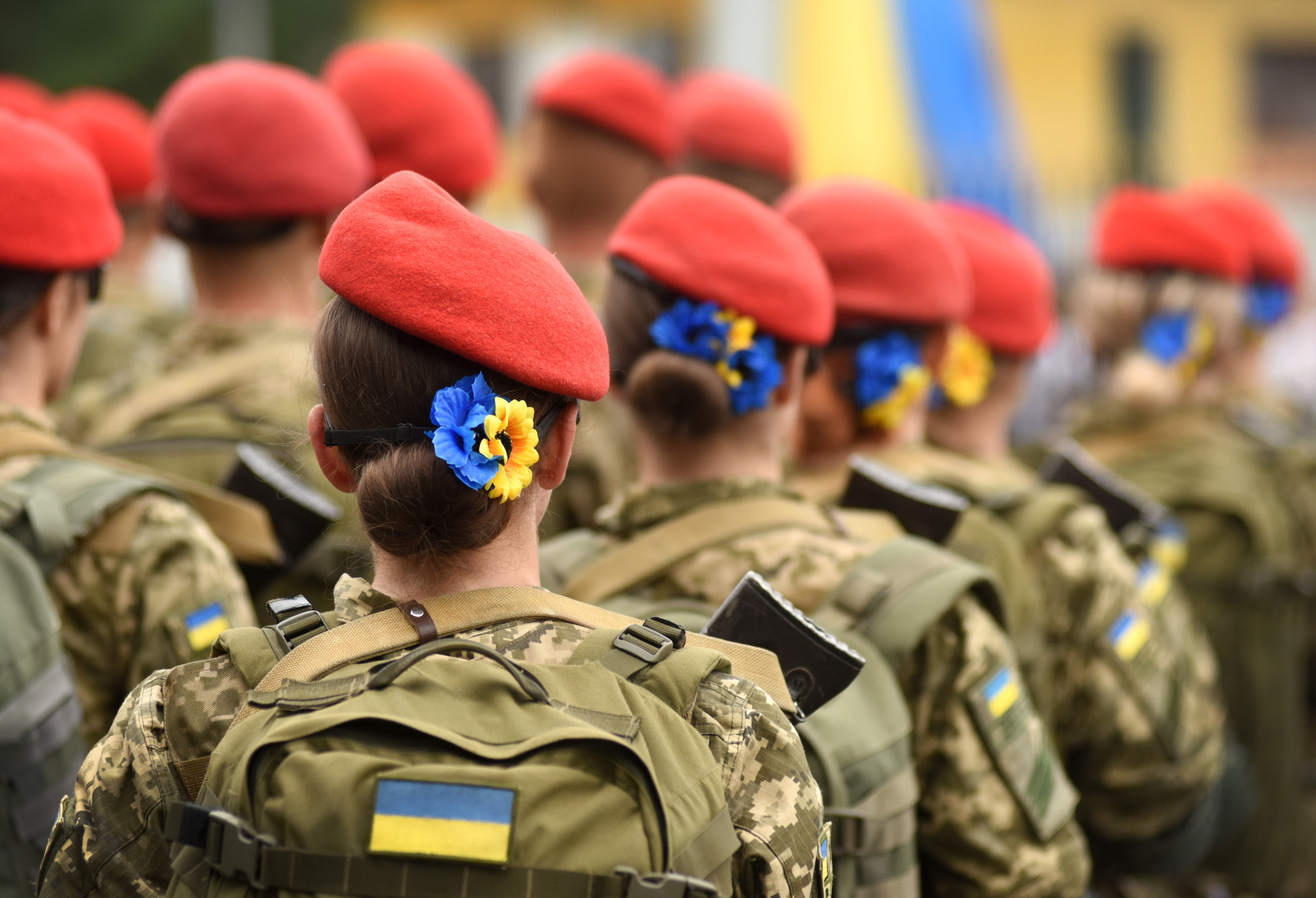
The world has seen an unmistakable display of leadership in President Volodymyr Zelensky of Ukraine. His performance has inspired the world because it has inspired his people.
Zelensky established calm when fear and chaos would have led to the likely undoing of his nation’s sovereignty. He then stoked the courage of people to successfully resist the fierce incoming onslaught of Russian forces that vastly outnumbered the Ukrainian troops and would have seemed to have the power to easily crush their defense.
We saw Zelensky openly refuse to take safe asylum and stand defiantly in open public spaces to unify the resolve of the Ukrainian people. We saw him step beyond the streets of Kyiv and onto the world stage with the aplomb of great world leaders (not unlike the vision of Winston Churchill he conjured before the British Parliament) who have changed the course of history. And we have seen the world respond to his performance with the admiration and respect of standing ovations and, more importantly, with the significant military and humanitarian support.
It has been widely noted that Volodymyr Zelensky was formerly an actor and comedian. It is easy to draw similarities to Ronald Regan. As an actor who was elected President, Regan easily inspired many with his calming and reassuring influence to ignite an ideology that continues to ripple through American culture and politics to this day. Donald Trump clearly also saw the power of being a media celebrity and performer — and while not a classic actor, he clearly behaved as one to the public and especially his political base.
Zelensky’s performance transcends politics. His influence speaks to a life-or-death threat that he has personally stood up to. Rather than the comeuppance sought by Putin’s military action, he effectively made Ukraine’s plight not only a life-or-death fight for his people but as a symbol of standing up to injustice for the world to follow.
Zelensky’s performance transcends politics. His influence speaks to a life-or-death threat that he has personally stood up to.
It is clear to me, at least, that the resolve, influence, and especially the unlikely accomplishments speak to the fact that it is not being a performer that causes one to rise to the demands needed of an exceptional leader. The ability to perform is the culmination of practice and discipline, the character necessary to courageously serve a noble cause with an unshakable sense of duty and the understanding that something more than just needs and desires or even your life depends on you. It may just be that making yourself into a consummate performer helps prepare you to become an exceptional leader – when it truly matters most.
William Shakespeare famously noted that “All the world’s a stage, and all the men and women are merely players; they have their exits and entrances; And one man in his time plays many parts…” We’ve seen what one man, Volodymyr Zelensky, has done upon the stage, and it begs the question, “what are you prepared to do?” Where have you been called upon to be the leader you need to be? We are all leaders, whether at work, as parents, as a member of your community, or simply how you choose to live your life. Is now the time you need to act like one?