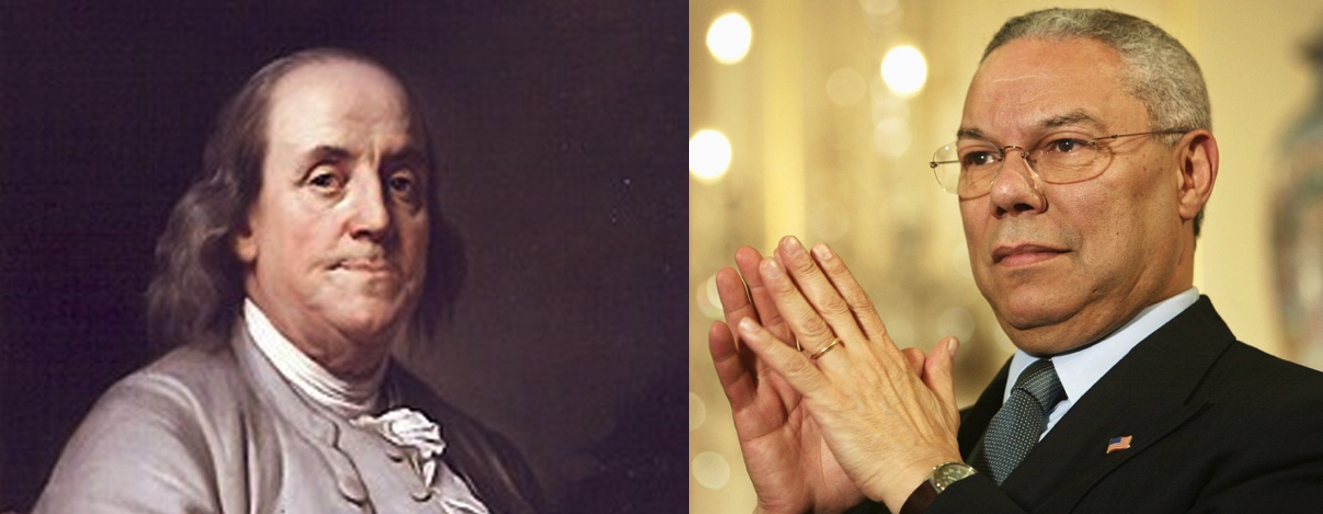
Benjamin Franklin is generally the cited source of the quote, “In this world, nothing can be said to be certain except death and taxes.” We can be certain, however, that Franklin was not the progenitor of the famous quote, further lending truth to it. But, as we know, people have devised ways to cheat taxes or avoid them altogether. While death does seem relatively inevitable to the human condition, the notion of eternal life is pervasive in religions. Science continues to prove that we can, at least, cheat death by defying what nature has in store, whether by simply extending life or turning to the means to place into frozen suspension a fading life with hopes that true immortality might be available and the being restored. All this is to simply point out that the world is entirely uncertain.
Colin Powell, the former U.S. Secretary of State and Chairman of the Joint Chiefs of Staff, expressed his fealty to uncertainty as a U.S. Army General, noting that delaying critical action in the pursuit of total certainty was folly. In his 18 Principles of Leadership, he advised that waiting until you have enough facts at your disposal to be 100% certain it is almost always too late. He wrote, “Once the information is in the 40 to 70 range, go with your gut, suggesting you refrain from action if your certainty remains below 40%. While assessing your confidence in a truly accurate ratio may be challenging, Powell’s insight speaks to chasing relative certainty as the leader’s best path forward.
Just about every CEO and business leader I have worked with has engaged me in a dialogue about decisions that have them wringing their hands or staring awake at the ceiling at night. When fearful of making a wrong decision, the desire to find absolute certainty reigns large. Of course, absolute certainty is generally only available when you decide to give up on your efforts. At that point, you are certain to fail. Moving forward with Powell’s success formula takes more than analysis; it requires courage. My benefit to these clients was invariably to help them find that courage and to leverage it into action. Being stuck in “analysis paralysis” undermines any intelligence you might otherwise employ to solve the problems you face.
Chasing relative certainty is about learning to make good decisions. Without embracing the inherent uncertainty of all things, you will find yourself bedeviled by procrastination and unable to lead the people in your organization forward. Many other leadership qualities contribute to your ability to decide. Learning to listen, surrounding yourself with the right people – and ideally, people smarter than you in their areas of expertise, prioritizing determination over fear as the driver of urgency, and keeping your ego in check so as to find the humility to accept when you are wrong will make you a leader capable of better decisions and achieving better results.